

![]() |
|||||
|
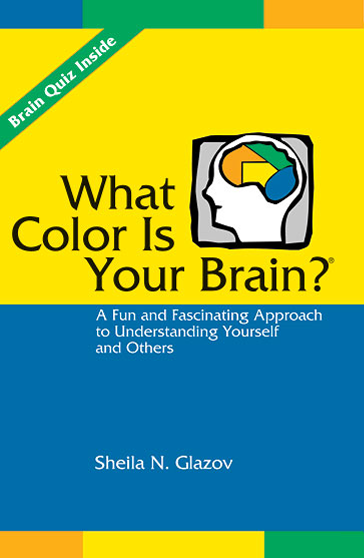
Welcome to our What Color Is Your Brain? celebration. Please, make yourself comfortable, you are the guest of honor. I have a gift for you, that you may know a lot or a little about, but just dont know what to call it. Your gift is What Color Is Your Brain? (WCIYB). It is a fun and fascinating approach that will help you understand and value yourself and others, resolve conflicts quickly, build harmonious relationships, and improve your job performance. Have you ever wondered why some people are a pain in your neck and others are a song in your heart? The answer will be obvious, once you discover what color your brain is. I assure you that learning WCIYB will be effortless, educational, and entertaining. It has practical applications that you can implement immediately in every facet of your life. I developed WCIYB as an introduction for my strategic planning/creative problem solving workshops. I wanted to create a non-judgmental environment that eliminated criticism and enhanced appreciation for each individuals ideas. The foundation for WCIYB is the Myers-Briggs Type Indicator or MBTI®, a well-respected self-reporting assessment tool. Isabel Briggs Myers and Katharine Cook Briggs developed the MBTI® in 1942, based on Carl Jungs four personality functions: Sensing, Thinking, Intuiting, and Feeling. They used 16 letter combinations to identify personality traits. I believe the MBTI® and other similar personality assessments offer valuable and valid information within a specific business organization, work environment, or career. However, their use of a series of letters, terms, and symbols are too complicated for children and often confusing for some adults, especially those of us who are dyslexic. I discovered that people respond positively to WCIYB because it:
A hospital supervisor once told me, Ive been trying to train my staff about customer service and how to understand people; I just didnt know there were colors to help me do it. If the title What Color Is Your Brain? piqued your interest, Im not surprised. We are naturally and socially curious about ourselves and others. The abundance of television and radio programs, websites, and magazines demonstrates and confirms the curiosity and fascination individuals have about celebrities, quasi-celebrities, everyday people, and their lives. WCIYB offers you an opportunity to look at yourself, your relationships, and how you communicate without the established boundaries you may be accustomed to or read about in other books. WCIYB is a quick and simple approach to help you:
I encourage you to begin using your gift by reading Chapter 1, The No Right or Wrong Answer Brain Quiz, and Chapter 2, Recognize Your Brain Color Strengths and Perspectives. These two chapters will clarify why the book contains detailed content and charts, personal anecdotes and quotes, innovative problem-solving methods, plus fun and fast reading material. Enjoy reading the other chapters in any order that works best for you. Use WCIYB as a reference book you can keep on your desk, in your briefcase, next to your bed or favorite reading chair. One of my Brain Color attributes is my enthusiasm, and people often tell me that my enthusiasm for WCIYB is contagious. Yes, I am eager to share my collection of data, stories, and experiences with you. I am honored and delighted when people share their WCIYB experiences with me and tell me how the Brain Colors have made a difference in their lives. If you would like to share your Brain Color stories with me and others, please submit them at www.whatcolorisyourbrain.com. Selected replies will be posted on the website. Enjoy celebrating your Brain Colors, honoring yourself, and sharing your color-filled gift with others. |
|
||||
|
Copyright 2007 SLACK Incorporated |
|||||